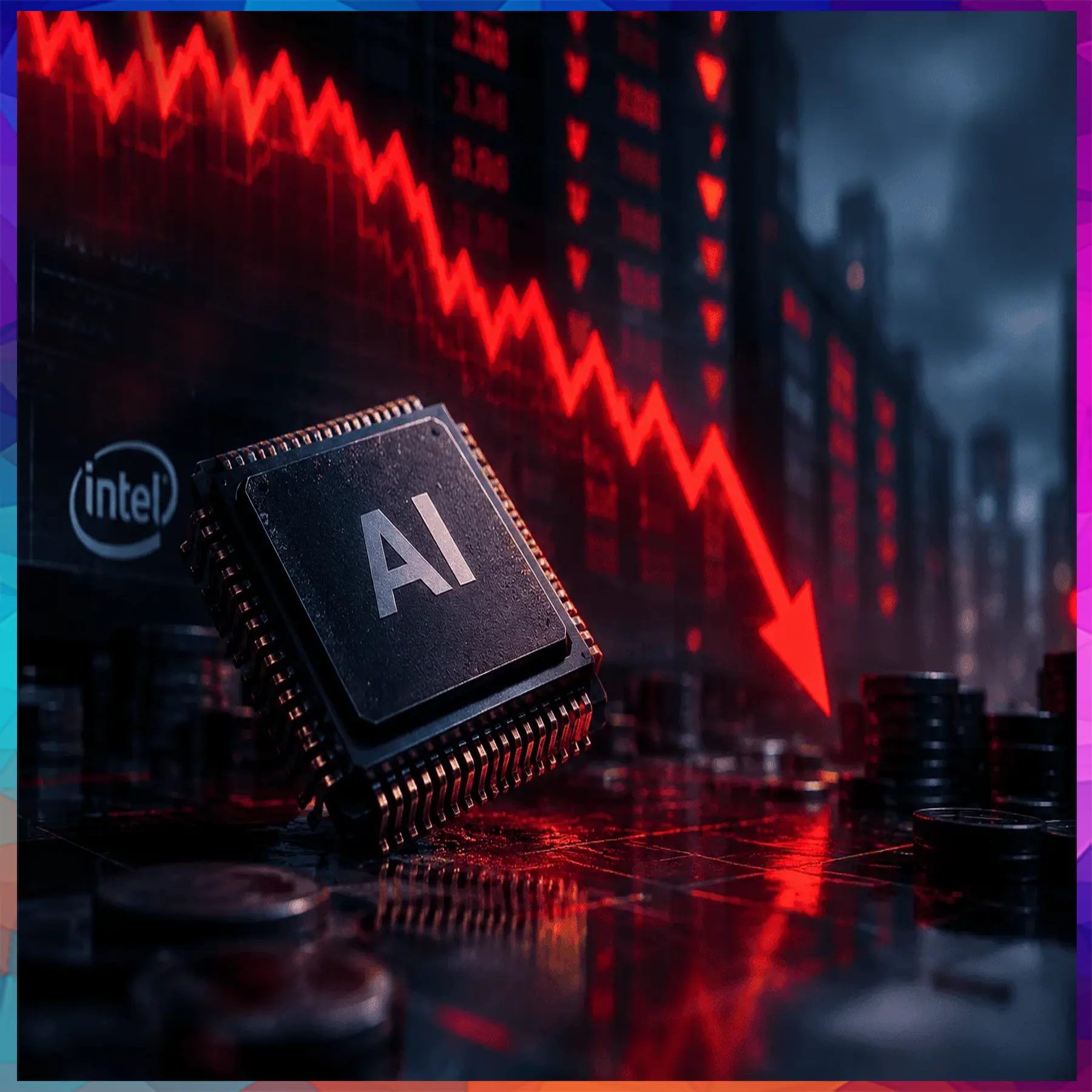
Intel suffered its steepest stock-market decline since 1974 on October 30, 2026, plunging approximately 29% as disappointing financial guidance triggered a massive technology-sector selloff. The collapse erased nearly $150 billion in market capitalization.
The downturn also wiped approximately $11 billion to $12 billion from the market value of the U.S. government's nearly 10% stake in Intel, highlighting the financial volatility surrounding Washington's semiconductor investment strategy.
Key Highlights: Why Intel's Stock Crashed
-
Weak Revenue Forecast: Fourth-
quarter guidance of $15–16 bil lion fell short of approximate ly $17 billion expected. -
Historic Share Price Collapse:
Intel shares declined around 29%, their worst session since 1974. -
Government Stake Erosion: Near
ly $12 billion in market value was erased from the U.S. gove rnment's holding. -
Soaring Memory Prices: AI data
-center demand increased compo nent costs, weakening the PC m arket. -
PC Demand Slowdown: Higher dev
ice prices and constrained ent erprise budgets threatened pro cessor sales. -
Cash Flow and Manufacturing Pr
essure: Heavy factory investments, debt and capacity constra ints challenged Intel's turnar ound. -
AI Investment Uncertainty: Inv
estors questioned whether esca lating AI infrastructure spend ing across Big Tech would deli ver sufficient returns.
The immediate trigger was Intel's disappointing fourth-quarter outlook. The chipmaker projected revenue between $15 billion and $16 billion, significantly below Wall Street expectations of approximately $17 billion, raising concerns about weakening demand and execution challenges.
Artificial intelligence is creating an unexpected problem for traditional semiconductor manufacturers. Massive AI infrastructure investments are consuming memory chips and other components, driving prices higher and making personal computers increasingly expensive.
Intel's PC business faces pressure as customers delay purchases amid rising component costs. Meanwhile, the company's ambitious manufacturing expansion requires substantial investment, squeezing cash flow despite improving demand for data-center processors.
The broader technology industry is experiencing similar pressures. Amazon's rising capital expenditure, alongside heavy AI investments by other technology giants, has intensified investor concerns about profitability, debt exposure and returns on unprecedented infrastructure spending.
The larger warning is that the AI revolution is creating winners and losers within the same technology ecosystem.Intel's recovery depends on restoring PC demand, expanding manufacturing capacity, improving operational efficiency and converting AI-related opportunities into sustainable profits. Investors increasingly want evidence that extraordinary AI spending can generate equally compelling financial returns.
Intel's collapse illustrates a

See What’s Next in Tech With the Fast Forward Newsletter








Tweets From @varindiamag
Nothing to see here - yet
When they Tweet, their Tweets will show up here.