SysGoRAT Targets Government Linux Servers
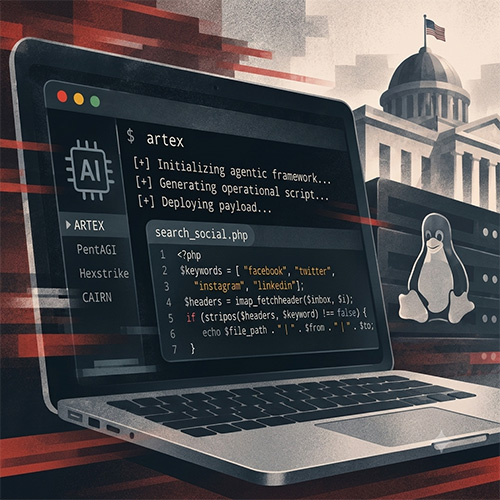
Government Linux servers have emerged as targets in a cyberespionage campaign involving SysGoRAT, a remote-access malware tool designed to compromise sensitive infrastructure. Researchers have also identified suspicious scripts potentially generated with artificial intelligence, highlighting the evolving sophistication of attacks against public-sector networks.
The campaign reportedly focuses on government institutions and state-affiliated infrastructure, where Linux systems frequently support critical applications, databases and administrative services. Such environments represent valuable intelligence targets because successful intrusions can expose confidential communications, operational information and sensitive government records.
The attackers deployed SysGoRAT, a custom remote-access Trojan written in Go, capable of operating across Linux and Windows systems. It established command-and-control connections, executed remote instructions, transferred files and maintained persistent access, allowing operators to conduct surveillance and potentially steal confidential information.
Palo Alto Networks' Unit 42 tracked the activity as CL-UNK-1211, observing operations between October 2025 and April 2026. Investigators discovered malicious PHP and shell scripts containing conversational annotations and reasoning comments, suggesting AI-assisted development or automated agent involvement. However, the precise role of AI remains unconfirmed.
The attackers reportedly exploited web shells, harvested administrator credentials and searched configuration files for exposed passwords. They also attempted to extract government databases and mailboxes, including messages associated with social media accounts, potentially enabling further impersonation and account compromise.
Particularly concerning were attempts to disable endpoint protection, erase system logs and plant misleading indicators resembling authorised penetration testing. These techniques were intended to conceal malicious activity, complicate forensic investigations and prolong unauthorised access within compromised networks.
The campaign demonstrates how AI-assisted cyberattacks could accelerate traditional espionage operations. Governments must strengthen Linux endpoint monitoring, privileged-access security, credential protection and behavioural threat detection. Unit 42 has not attributed the campaign to a specific nation-state or criminal organisation, underscoring the continuing challenges of cyberattack attribution.

See What’s Next in Tech With the Fast Forward Newsletter









Tweets From @varindiamag
Nothing to see here - yet
When they Tweet, their Tweets will show up here.