Hackers Exploit Teams for Ransomware Attacks
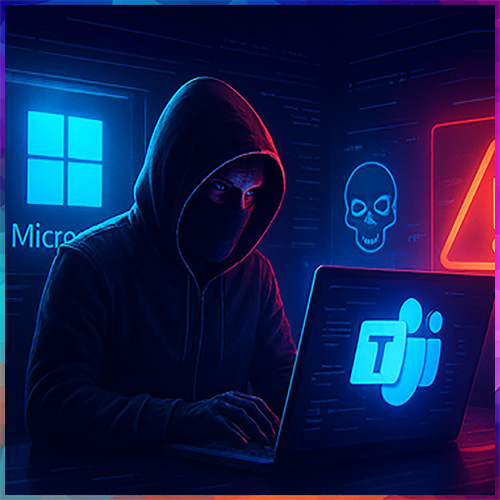
Cybercriminals are increasingly exploiting Microsoft Teams to impersonate IT support personnel, trick employees and deploy malware or ransomware. Security researchers warn that this recurring social engineering technique has surfaced across hundreds of incidents, exposing weaknesses in enterprise collaboration security.
Attackers exploit Microsoft Teams' external chat functionality to initiate conversations with unsuspecting employees. By posing as legitimate helpdesk representatives, they establish credibility and persuade victims to follow instructions that compromise corporate systems.
The attacks frequently begin with email bombing, where victims receive overwhelming volumes of spam messages. Shortly afterward, criminals contact them through Teams, claiming to offer technical assistance in resolving the apparent disruption.
Once trust is established, attackers persuade employees to launch remote-access tools, execute malicious commands or install supposedly legitimate troubleshooting software. These actions can provide unauthorized access to corporate devices and sensitive business information.
Unlike conventional phishing emails, Teams-based attacks exploit the familiarity and perceived legitimacy of enterprise communication platforms. Employees may mistakenly assume that messages received through approved workplace applications originate from trusted internal personnel.
After gaining initial access, threat actors can steal credentials, establish persistence and move laterally across corporate networks. In more serious incidents, compromised systems become entry points for ransomware deployment and data exfiltration.
The growing adoption of collaboration platforms has expanded the enterprise attack surface. Cybercriminals increasingly target communication workflows rather than relying exclusively on software vulnerabilities, making human trust a critical security weakness.
Organizations must strengthen external communication policies, restrict unauthorized remote-support tools and implement identity verification for IT assistance requests. Security awareness training should emphasize the risks associated with unsolicited technical support interactions.
Advanced defenses should combine endpoint detection, behavioral analytics, zero-trust access controls and continuous monitoring. Security teams must also correlate suspicious Teams conversations with endpoint activity to identify potential attacks before they escalate.
Ultimately, these incidents demonstrate that trusted collaboration platforms can become powerful attack channels. Enterprises must move beyond conventional perimeter security toward continuous identity verification, contextual threat intelligence and proactive ransomware containment to protect their digital environments.

See What’s Next in Tech With the Fast Forward Newsletter






Tweets From @varindiamag
Nothing to see here - yet
When they Tweet, their Tweets will show up here.