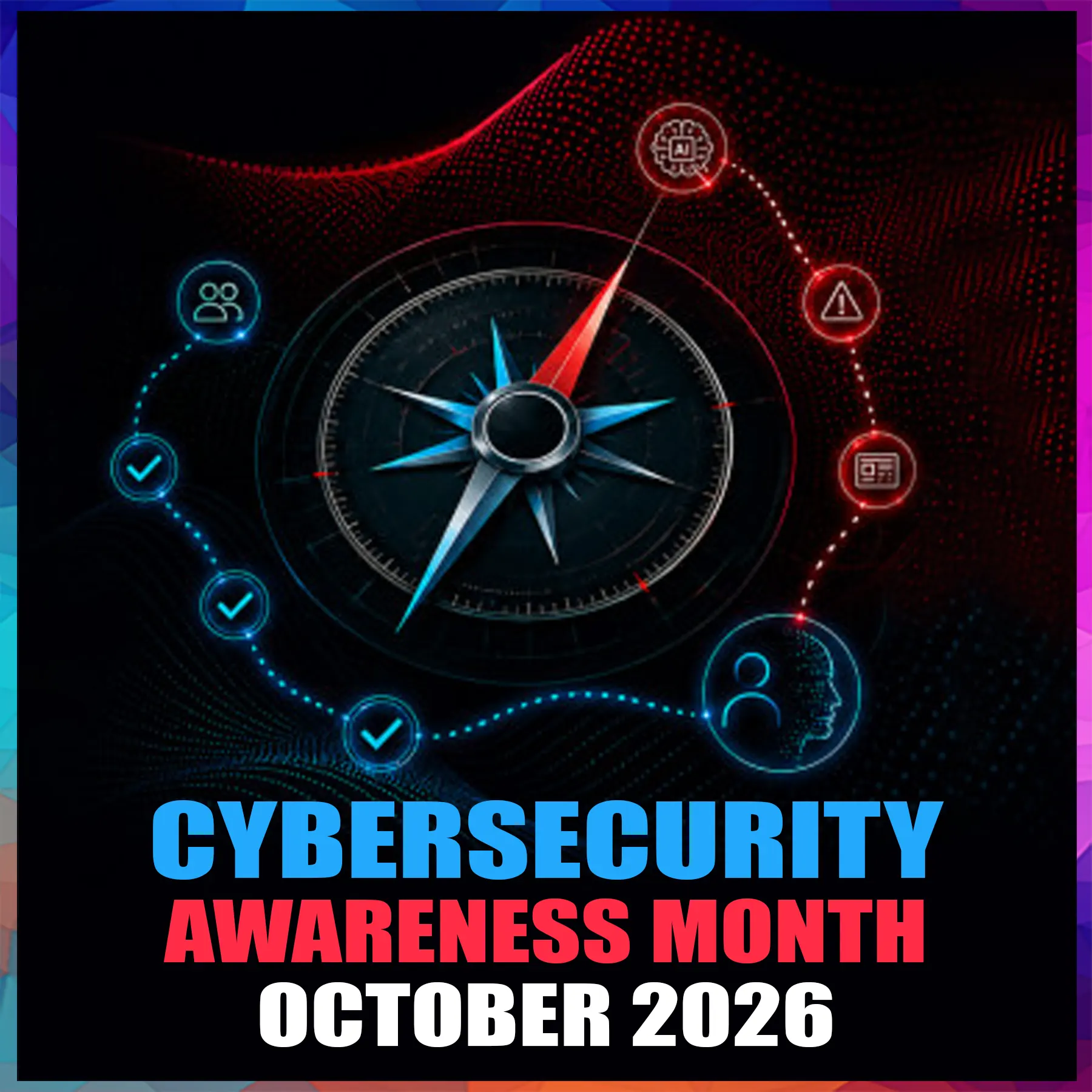
Cybersecurity Awareness Month, observed every October, brings renewed attention to the risks that accompany an increasingly connected digital economy. For Indian as well as global enterprises, the occasion comes as artificial intelligence, cloud services and digital platforms become more deeply embedded in business operations, creating new opportunities alongside challenges in protecting data, systems and customer trust.
The growing use of AI agents adds another dimension to the security landscape. As these systems gain access to enterprise data and undertake tasks across applications, organisations must consider how permissions are assigned, how actions are monitored and where human oversight is needed. The risks are not limited to external attacks; excessive access and unintended actions can also expose businesses to harm.
At the same time, detecting a threat is only one part of the challenge. Enterprises must be prepared to assess the extent of a compromise, protect identities and restore critical services from trusted recovery points. These considerations place cyber resilience alongside prevention as a business priority.
Cybersecurity Awareness Month also serves as a reminder that technology alone cannot address every risk. Strong security practices depend on governance, employee awareness and accountability across the organisation, supported by regular reviews as technologies and threats evolve.
Against this backdrop, industry leaders share their perspectives on the changing cybersecurity landscape, the importance of security fundamentals and the steps organisations can take to strengthen preparedness and sustain trust in an AI-driven digital economy.
 Three Myths Indian Enterprises Must Rethink in the Age of AI
Balaji Rao, Area Vice President, India & SAARC, Commvault
“India’s AI ambitions are accelerating, but so is the complexity of securing an increasingly digital economy. As enterprises deploy AI agents across business systems, traditional security assumptions are being tested. With CERT-In reporting over 29.44 lakh cyber incidents in India in 2025, organizations must rethink not just how they prevent attacks, but how they manage risk when AI acts at machine speed.
Myth 1: AI risk starts and ends with malicious actors. AI agents can access sensitive data, operate with delegated identities and take actions autonomously. Excessive permissions, unmanaged access and unintended actions can create exposure even without an external attacker. Enterprises must know what their AI can access, what it can change and where risks are emerging.
Myth 2: Detecting threats means we are in control. Detection is only the beginning. Threats can remain hidden in protected data, while compromised identities can give attackers continued access. Organizations need to uncover hidden threats, understand the extent of compromise and establish what can still be trusted.
Myth 3: If we can restore, we can recover. Restoring data does not guarantee safe operations. Enterprises must identify clean recovery points, re-establish trusted identities and restore critical applications in the right order. Otherwise, recovery can reintroduce threats rather than eliminate them.
This Cybersecurity Awareness Month, Indian enterprises must move beyond assuming they are protected to proving they are prepared. Know what your AI can access. Know what your security tools may have missed. And know you can recover cleanly when prevention fails. In the age of AI, security is not just about stopping threats. It is about keeping business running when they get through.”
 Agentic AI Adoption Calls for Stronger Security, Guardrails and Accountability
Raja Lakshmipathy, Vice President and Managing Director – India & SAARC, Genesys
“As Indian organisations move from AI experimentation to deploying agentic AI across customer experiences, security, privacy and governance will need to remain central to that journey and need to evolve alongside it. AI agents are increasingly able to reason, taking on more complex tasks and interacting with enterprise systems, making it important to establish clear boundaries around access, decision-making and accountability.
This is where agentic orchestration can play an important role - to bring AI, people, data and systems together as part of a connected customer experience. To do so, the focus needs to be on creating a human and AI partnership where technology can act with the right context, while humans continue to guide, supervise and step in when their judgement or expertise is required. This requires clear permissions for technology teams, appropriate guardrails and a shared understanding across the organisation of how AI should be used. With AI capabilities developing rapidly, governance should not be a one-time exercise. Security and governance practices will need to be continually reviewed as organisations expand their use cases.
Cybersecurity Awareness Month provides an opportunity to reinforce the importance of these measures and a timely reminder that responsible AI innovation and customer trust need to go hand in hand.”
 Securing India’s Digital Future Through Shared Responsibility
Sunil Sharma, Managing Director & VP – Sales (India & SAARC), Sophos
“India’s digital transformation is creating unprecedented opportunities for businesses of all sizes. From digital payments and AI-driven innovation to cloud adoption and connected ecosystems, organizations today are embracing technology to drive growth, improve customer experiences, and stay competitive. As this journey accelerates, cybersecurity is no longer just an IT consideration. It has become a critical business priority that underpins trust, resilience, and long-term success. The conversation around cybersecurity is also evolving at the leadership level. Regulatory developments such as the Digital Personal Data Protection Act have reinforced the importance of responsible data stewardship, while growing digital dependencies have made cyber resilience an essential component of business strategy.
This Cybersecurity Awareness Month, companies should view cybersecurity as a shared responsibility that extends across the organization. Building a culture of awareness, accountability, and preparedness is just as important as investing in technology. The organizations that embed security into their growth agenda today will be best positioned to earn stakeholder trust, adapt to change, and thrive in an increasingly digital economy.”
 AI Agents Need the Same Security Discipline as Employees
Vaibhav Tare, Chief Information Security Officer, Fulcrum Digital
“This year's Cybersecurity Awareness Month theme, Stay Safe Online, is often read as a consumer message, but enterprises can't afford to treat it that way. As AI agents take on more of the day-to-day work inside organizations, from processing documents to executing transactions, every one of those agents needs the same basic hygiene we ask of employees: strong identity controls, least-privilege access and continuous monitoring of what they're allowed to do. Attackers rarely need to break through a firewall if they can walk in through an unmonitored agent or a reused credential. The organizations that stay resilient won't necessarily be the ones with the newest security tools, they'll be the ones that got the fundamentals right for both their people and their AI systems. At Fulcrum Digital, we build that discipline into how we design AI systems from day one, because prevention is still far cheaper than recovery."

See What’s Next in Tech With the Fast Forward Newsletter




Tweets From @varindiamag
Nothing to see here - yet
When they Tweet, their Tweets will show up here.